Why Your Home Still Doesn't Feel Like Yours (And What's Really Going On)
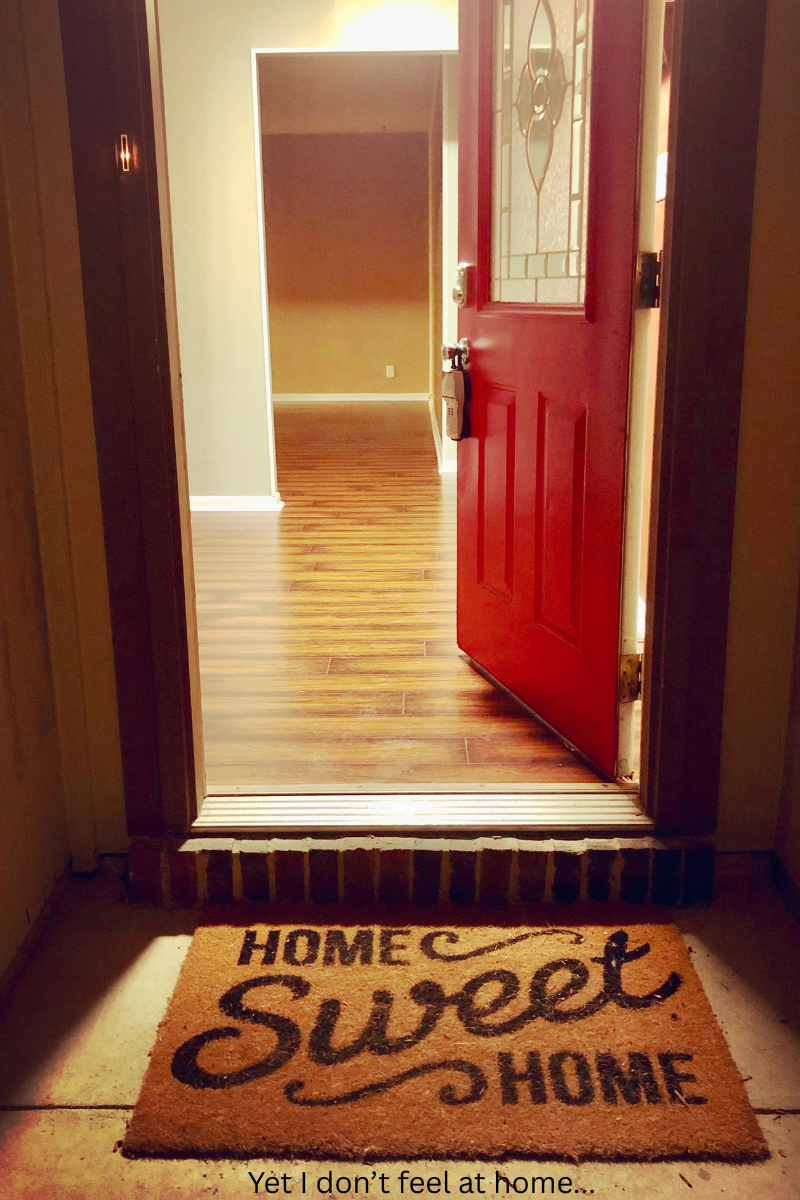
You've been living in this home — maybe for months, maybe for years since your loss. You've cleaned it. You've organized it. You may have even bought new things for it. And yet, when you walk through the front door, something still doesn't feel right. It doesn't feel likeyours.
If you've experienced this, you are not imagining it. And it is not a sign that something is wrong with you. It is a sign that your home is still holding something that needs to be addressed — and that the approach you've tried so far hasn't reached the root of it.
Your home is not just a physical space. It is an emotional one. And when a relationship ends, or a partner dies, the emotional landscape of your home doesn't update automatically.
The Real Reason Your Home Doesn't Feel Like Yours
Most people assume that the way to reclaim a home is to change the physical things in it — paint a wall, move some furniture, donate boxes to charity. And while those actions can be meaningful parts of the process, they are rarely the beginning of it. They are the middle, or even the end.
The beginning is understanding what your home is actually holding. Every space carries emotional energy. The couch where you used to sit together. The side of the bed that was his. The kitchen where you made Sunday breakfasts for a life that no longer exists. These are not just objects and locations. They are anchors — and they anchor you to a version of yourself that you are no longer living as.
Until you understand the emotional charge that each room carries, and until you work through that charge intentionally, no amount of redecorating will make your home feel like yours. You will change the things, but not the feeling. And the feeling is what you are actually trying to change.
The Two Most Common Coping Responses — And Why Neither One Works Alone
When women are going through major loss, there are typically two emotional responses to the home: purging, and holding on.
The Purger
The purger needs things gone. She donates bags and boxes. She clears out closets. She removes every visible trace of the relationship because the sight of it is too painful. This response makes complete sense — and it can feel enormously relieving in the short term. But purging without intention often leads to regret, and it rarely resolves the emotional weight of the space. You can empty every drawer and still feel him in the room.
The Holder
The holder cannot release anything. She walks around objects, avoids rooms, keeps things exactly as they were because changing them feels like a betrayal or a finality she is not ready for. This too makes complete sense. But staying in a home that is preserved like a museum keeps your nervous system in a state of unresolved grief — surrounded by evidence of a life that is over, with no signal that a new one has begun.
Neither response is wrong. Both are attempts to cope with something that is genuinely difficult. But both, without a framework and intention behind them, leave you stuck in the same place: a home that belongs to the past rather than the present.
What Actually Works
What works is a process — not a weekend project. It involves understanding the emotional charge that each space holds before you touch it. It involves knowing your own attachment patterns: why certain objects feel impossible to release, and what they represent beyond their physical form. It involves making decisions about your home from a place of identity rather than fear — asking not "should I keep this?" but "does this belong in the life I am building?"
This is the work at the heart of the Home to Healed Roadmap. Not decoration. Not decluttering. Transformation — from the inside out, one room at a time, in an order that honors how healing actually happens.
Your home can become the first place where your new life is visible. But it takes more than moving things around. It takes intention. It takes support. And it takes someone who understands that the work is emotional as much as it is physical.
If you are ready to begin, I would love to talk with you.